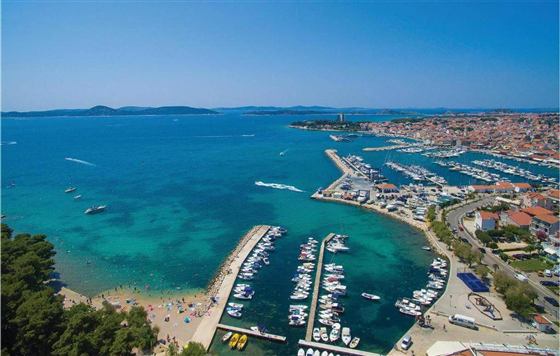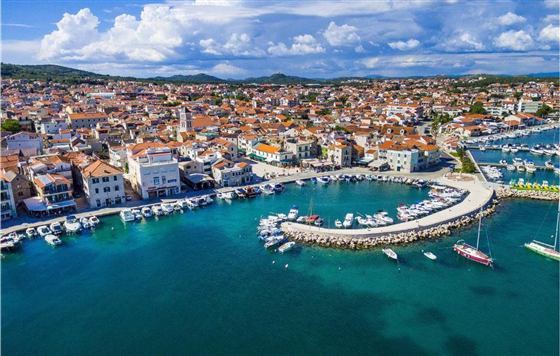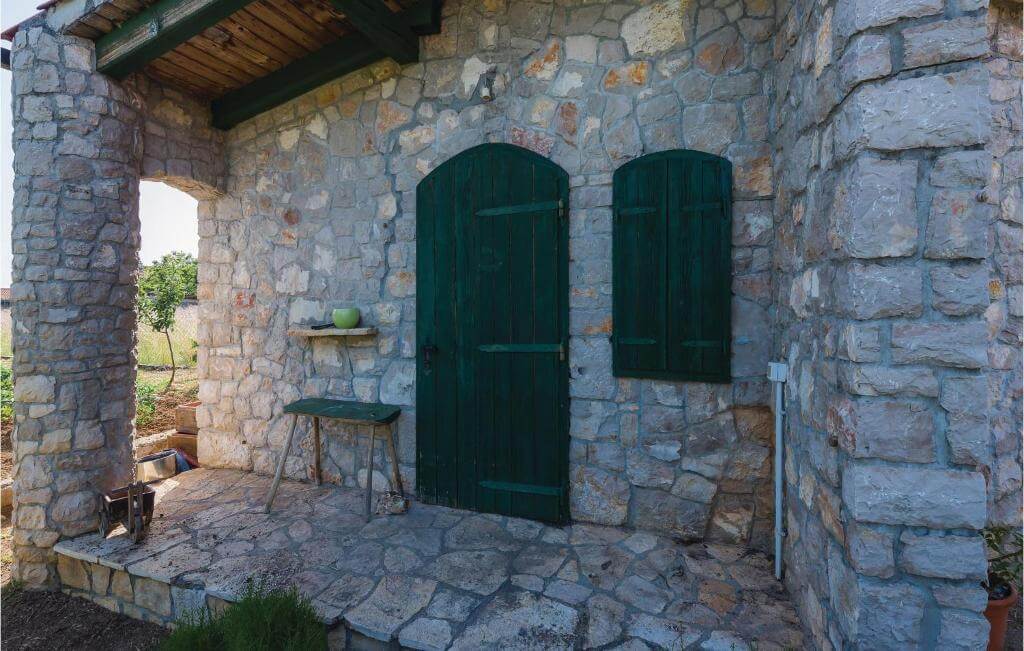
Ten minutes inland from the beach umbrellas of the Adriatic, the world quietly changes. The coast road gives way to lanes lined with drystone walls, built by hand over centuries, stone balanced on stone without a gram of mortar. Olive groves and fig trees take over from apartments and marinas. Villages like Velika Čista — home of PRIKA Pool House — doze in the sun much as they did a hundred years ago. This is the Zagora, the Dalmatian hinterland: the Dalmatia that existed long before tourism, still just minutes from the sea.
Guests come to us for the pool and the coast. But when they write to us afterwards, this is what they talk about: the mornings when the only traffic is a tractor and a greeting, and the evenings when the cicadas take over and the sky fills with more stars than they have ever seen at home.
The old watermills: stone, water and centuries of bread
Scattered along the streams of the hinterland stand its most atmospheric monuments: old stone watermills, some of them centuries old, where the villagers of the Zagora once brought their grain to be ground. The closest, Kalanjeva Mlinica, is only 5 km from the house — an easy goal for a morning walk or a slow drive before the heat builds. A little further on are Kulina Mlinica (7 km) and Popova Mlinica (8 km), their thick walls and worn millstones still standing beside the water that once powered them.
Don't expect ticket booths or opening hours — that is exactly the point. These are quiet, half-forgotten places where you can put your hand on stone that generations of millers polished smooth, listen to the water, and have the whole scene entirely to yourself. Photographers love them in the low morning light.
Ostrovica: a fortress on a rock
Eleven kilometres from the house, a dramatic crag rises abruptly out of the karst, crowned by the ruins of Ostrovica Fortress. In the Middle Ages this was one of the key strongholds of the Croatian nobility — a seat of the powerful Šubić family, who controlled these lands and whose story is woven through the whole region. A short, rocky hike takes you to the top, and the reward is enormous: the whole hinterland spread out below you, from the mountains to the glittering line of the sea.
Bribirska Glavica: the Croatian Troy
Also 11 km away, the flat-topped hill of Bribirska Glavica is one of Croatia's great archaeological sites — so layered with history that archaeologists call it "the Croatian Troy". The Liburnians fortified it in antiquity; the Romans built the town of Varvaria on its plateau; medieval Croatia made it a princely seat of the same Šubić dynasty. You walk among Roman foundations, early churches and mighty ramparts, with sweeping views over the Zagora from every edge of the plateau. That a place like this stands almost empty of visitors says everything about how secret this hinterland still is.
Sv. Martin, konobas and the taste of the Zagora
Near Bribirska Glavica stands the small stone church of Sv. Martin (11 km) — simple, ancient and lovely, the kind of chapel that has anchored village life here for centuries. And village life is the hinterland's final treasure: family konobas (taverns) where lamb is slow-roasted under the iron bell called a peka, where the olive oil comes from the grove behind the house and the wine from the vineyard down the lane. Menus change with the seasons and the family's mood, so do it the local way: ask us, your hosts, which konoba is cooking best right now — we will happily point you to it and tell them you're coming.
Practical information
- Kalanjeva Mlinicaold watermill · 5 km
- Kulina Mlinicaold watermill · 7 km
- Popova Mlinicaold watermill · 8 km
- Ostrovica Fortressruins, short hike · 11 km
- Bribirska Glavicaarchaeological site · 11 km
- Church of Sv. Martin11 km
- Footweardecent shoes for the rocky fortress paths
- Best timemornings or late afternoons in summer heat
- Getting arounda car is needed — distances are short, buses are not
When the cicadas take over
Here is the honest truth about the hinterland: it works on you slowly. You come for a week of pool and beaches, and somewhere around day three the Zagora gets under your skin — the smell of sage and hot stone, the church bell across the valley, the evening when you look up from the terrace and realise you can see the Milky Way. No light pollution, no noise, just Dalmatia as it has always been. That is what our guests remember longest, and it is not something you can book at a resort.
And when you want a change of pace, everything is close: the hinterland road continues straight on to the waterfalls of Krka National Park, the beaches of Vodice are 15 minutes away, UNESCO-listed Šibenik makes a perfect day trip, and boats leave Vodice daily for the Kornati Islands. Coast by day, Zagora by night — the best of both Dalmatias.